Minotti Brutalist table
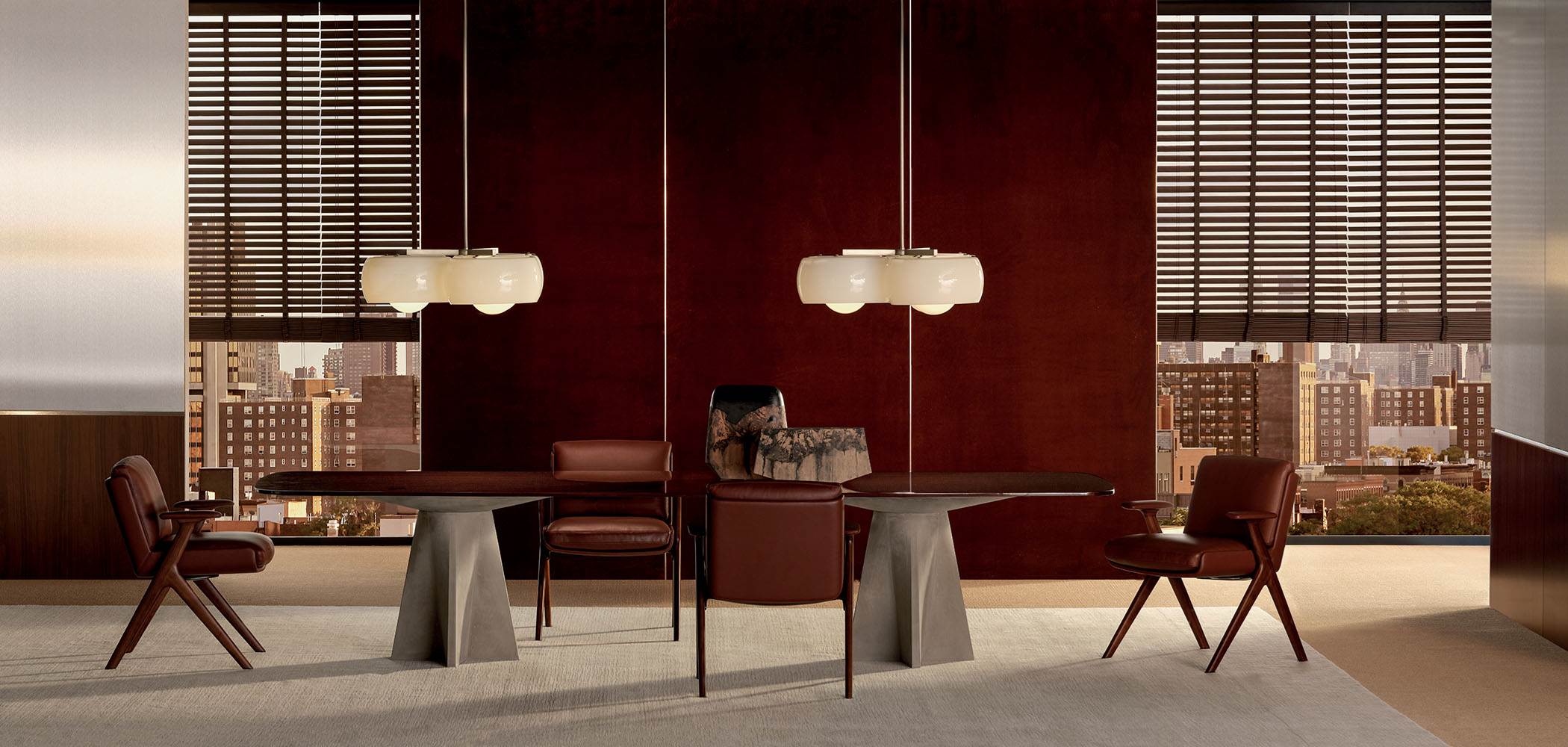
The Minotti Brutalist, designed by Giampiero Tagliaferri and introduced as part of the 2026 Collection, is a table conceived as a structural gesture. Its construction logic draws from late 20th century Italian engineering architecture, where material is not hidden but openly celebrated and function becomes a formal language. The specific reference is one of Pier Luigi Nervi’s most emblematic works, the Palazzo del Lavoro in Turin: a spatial concept developed as a free, modular and flexible space sustained by a supporting framework that combines technical rigour with visionary thinking.
Description
Design Concept
Tagliaferri positions Brutalist as a furnishing piece with strong cultural value: a table for those who recognise in structure not only purpose but a form of beauty intended to endure. The piece operates equally well in classical and contemporary contexts, carrying what Minotti describes as an authority born of material honesty. Every tension is balanced, every mass calibrated, in a constant dialogue between solids and voids that gives the table its sculptural presence.
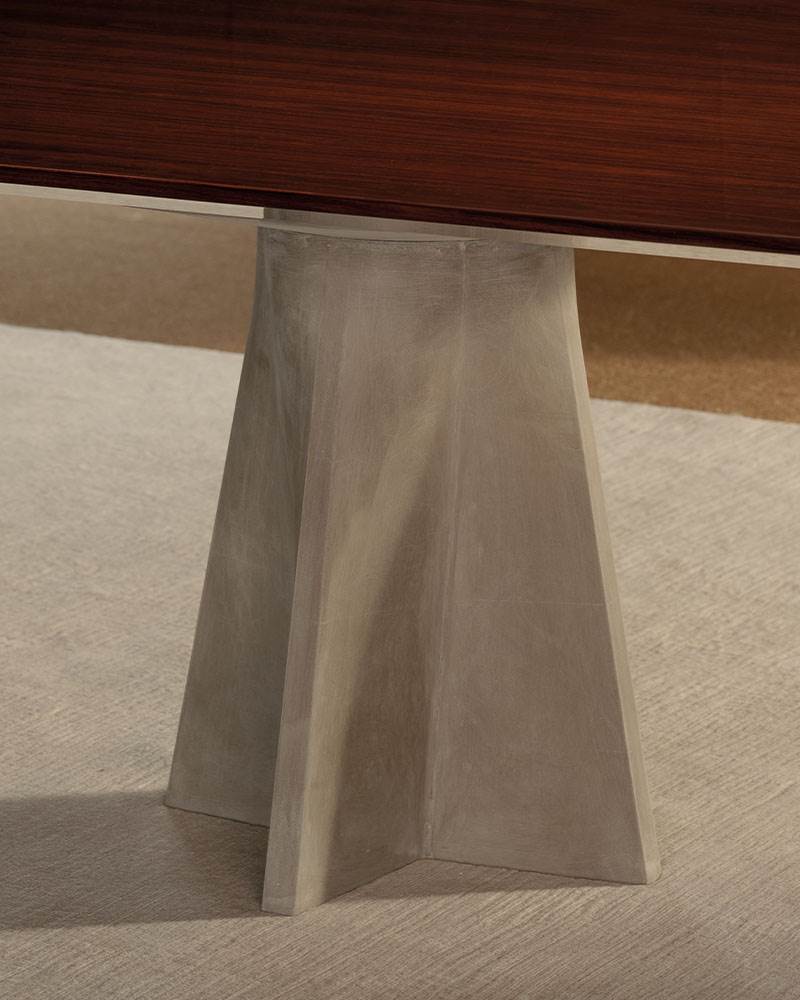
The Concrete Star-Geometry Base
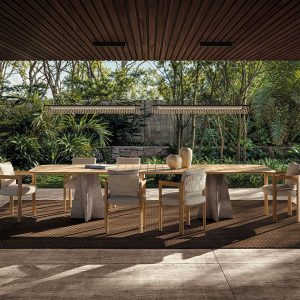
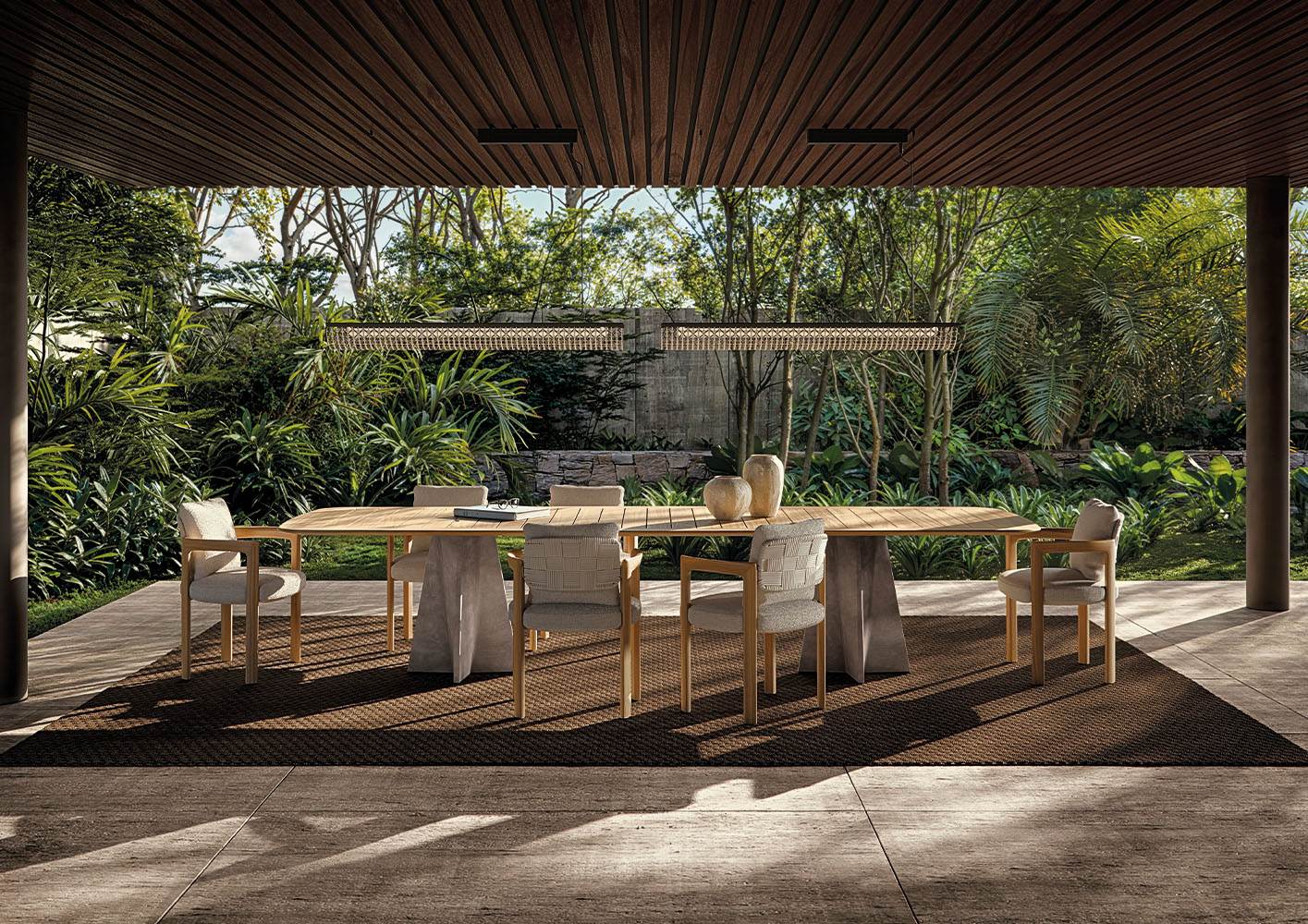
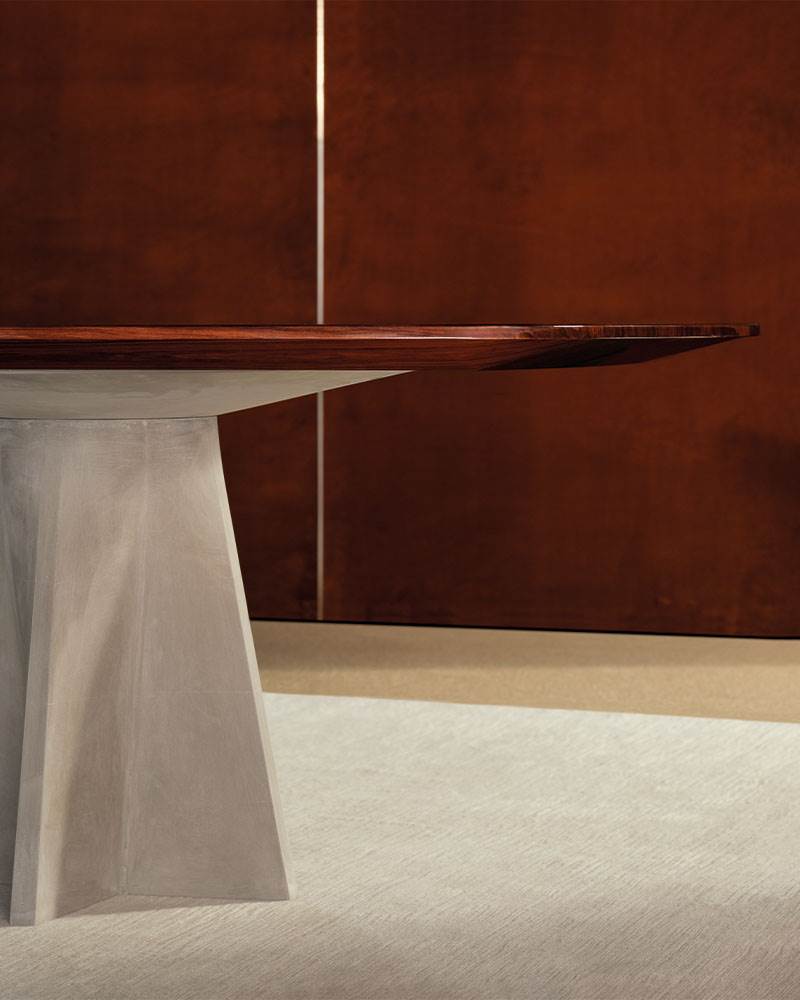
The sculptural concrete base is defined by an irregular star-shaped geometry that amplifies its authenticity and visual impact. The supporting elements multiply and vary in size according to the type and configuration of the top selected, functioning as an integrated system rather than a generic support structure. This approach, directly derived from Nervi’s structural thinking, means the base reads differently and shifts in visual weight depending on the top it carries, always maintaining a calibrated balance between mass and void.
Top Options & Profiles
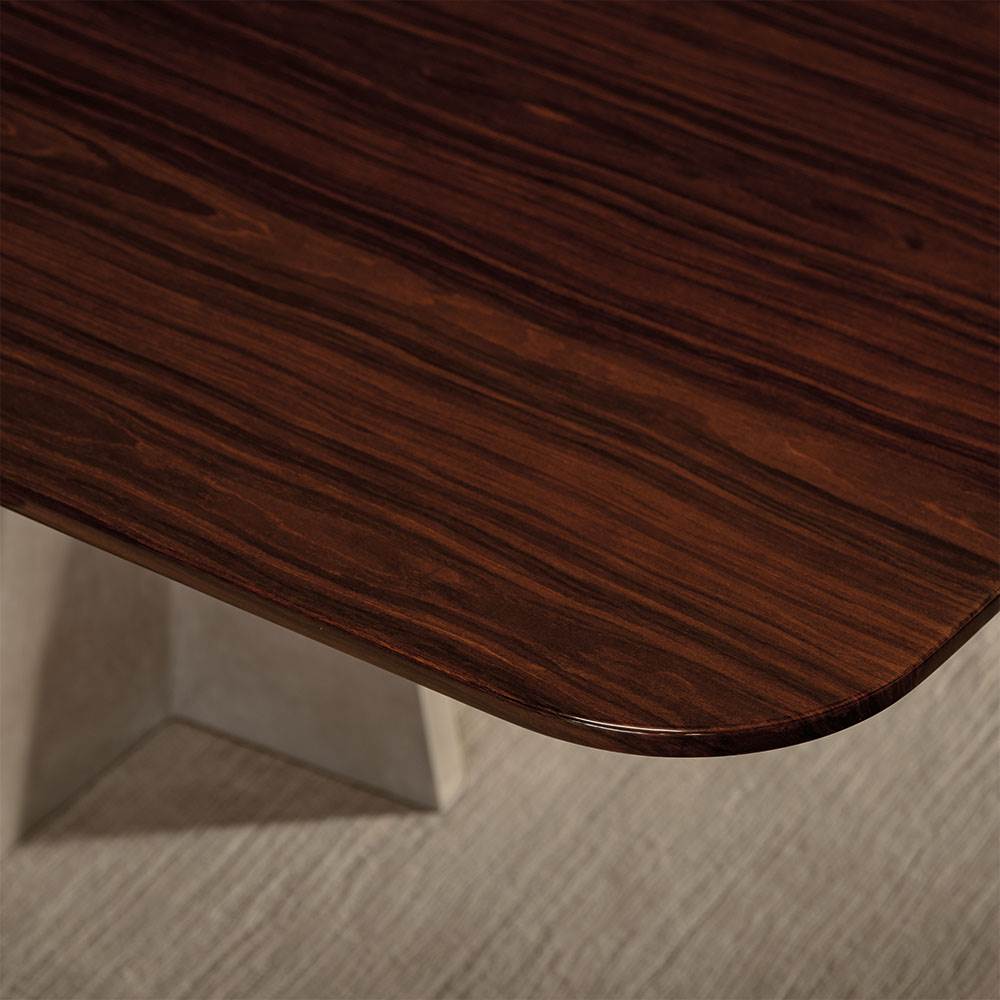
The top is available in round, square or rectangular forms, each with softened corners and subtly convex edges that introduce a note of formal softness to counterbalance the expressive strength of the concrete base. This contrast between the geological weight of the base and the refined profile of the top is the defining visual tension of the piece, and it holds across all three top configurations equally.
Configurations
Available configurations:
– Sculptural concrete base, irregular star geometry, supporting elements scaled to top type
– Round top, softened corners, subtly convex edges
– Square top, softened corners, subtly convex edges
– Rectangular top, softened corners, subtly convex edges
Perfect For
– Living and dining rooms where a table is required to carry both formal authority and sculptural presence
– Interiors that draw on engineering architecture, brutalism or Italian modernism as primary references
– Spaces where the visual tension between a raw concrete base and a refined convex top edge defines the room’s material conversation
– Collectors and design enthusiasts who recognise Nervi’s Palazzo del Lavoro as a cultural touchstone
– Both classical and contemporary interiors where the piece’s cultural weight reads as intentional rather than incongruous
– Hospitality spaces where the table functions as a centrepiece object as much as a functional surface
Brutalist is the kind of table that asks nothing of the room except the space to hold it. Nervi’s structural thinking, Tagliaferri’s eye for form, and concrete that carries both without apology.