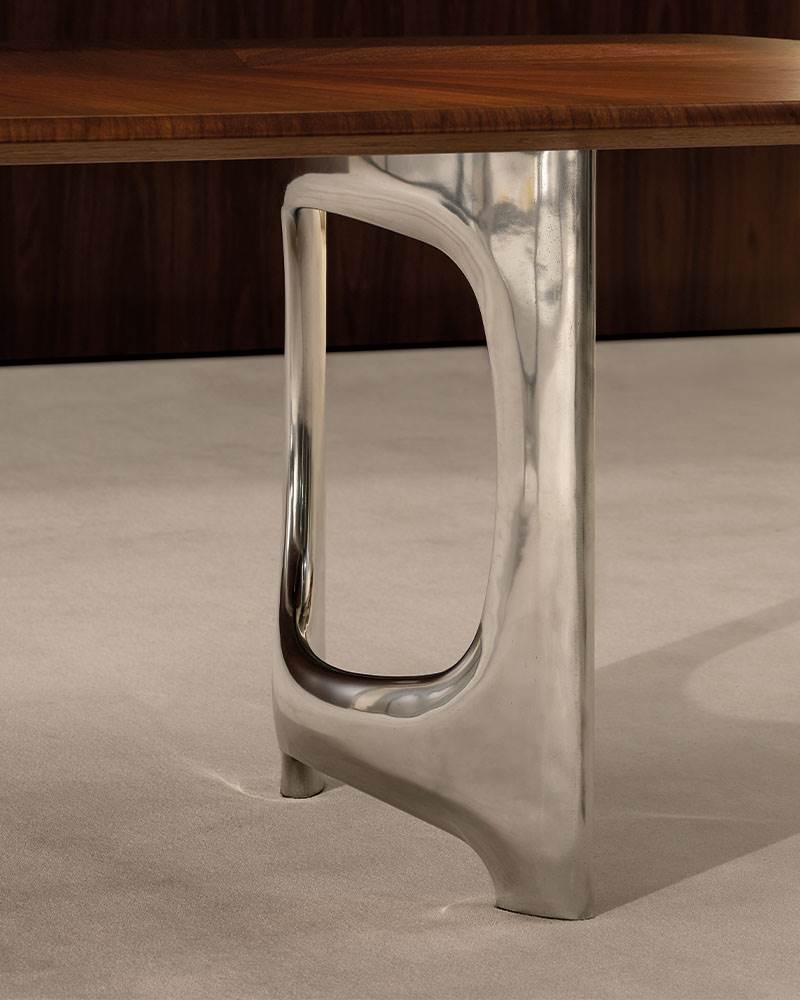
Minotti Blaine table
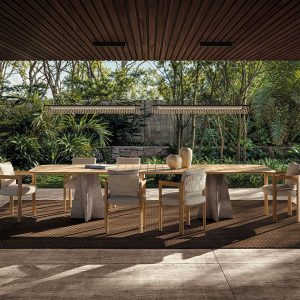
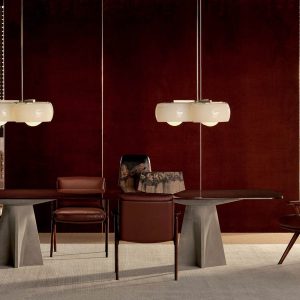
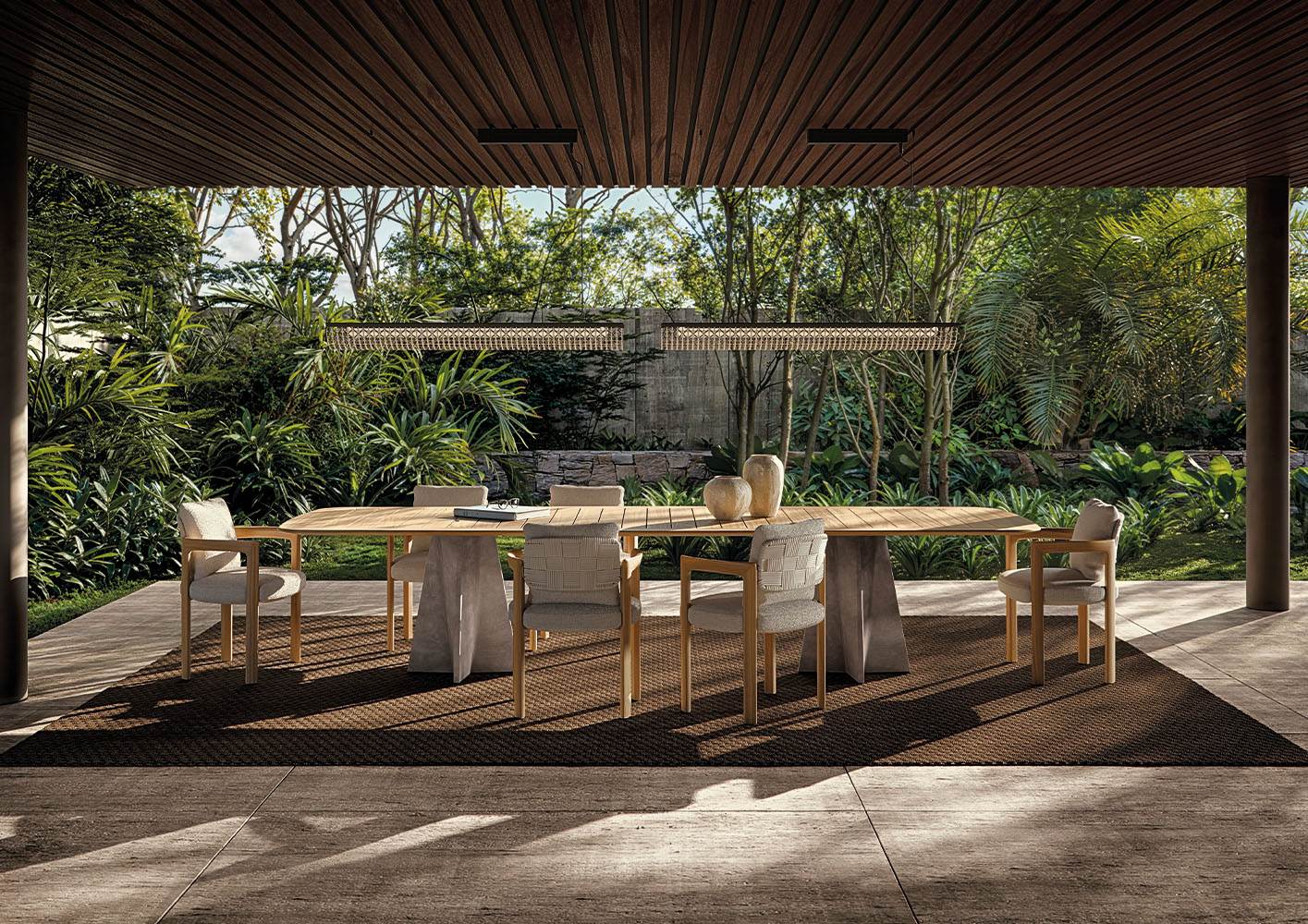
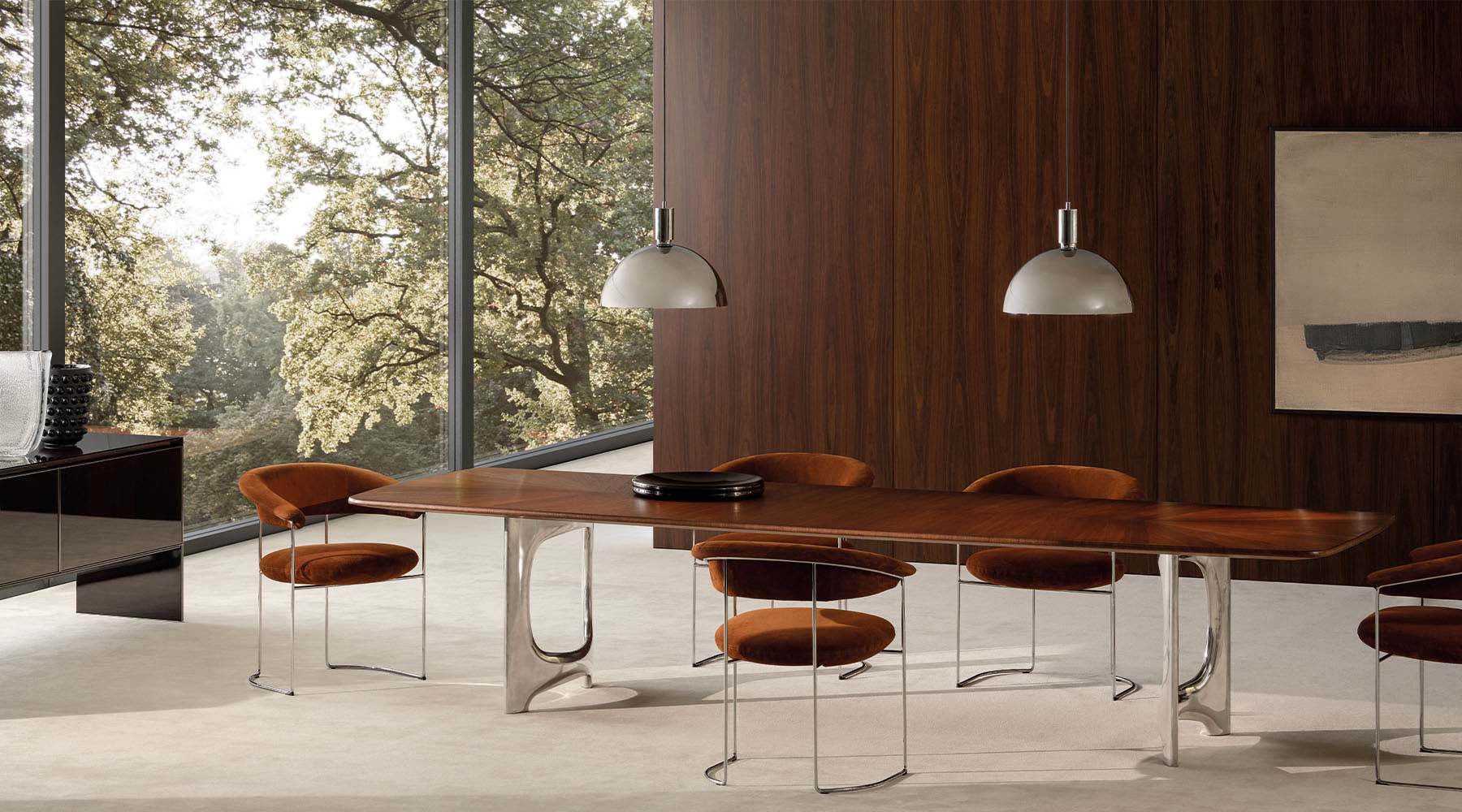
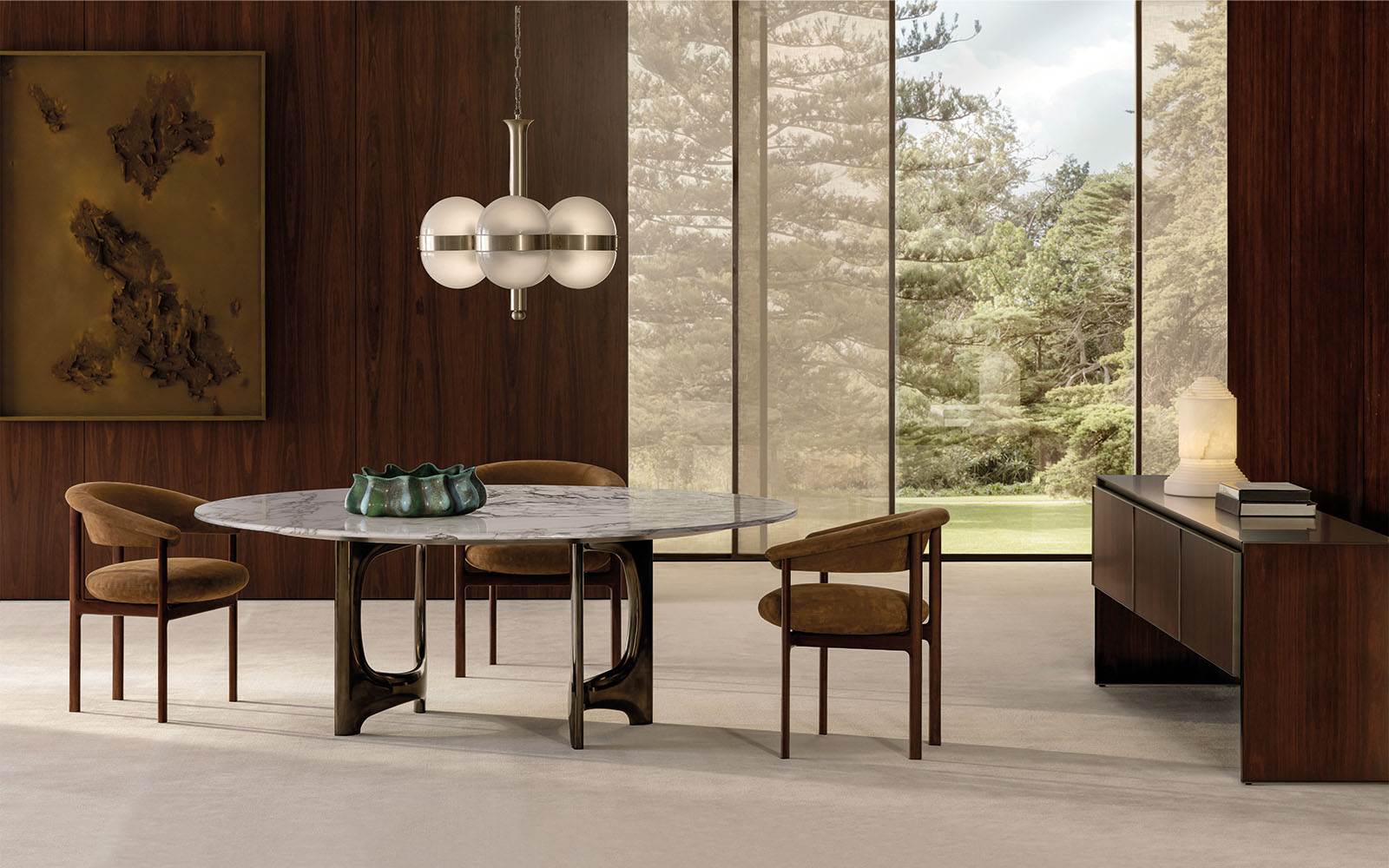
The Minotti Blaine, designed by Hannes Peer and introduced as part of the 2026 Collection, is a table whose dynamic, expressive silhouette arises from an eclectic fusion of references: the organic, carved and monumental forms of Henry Moore, where solids and voids interact in careful balance, and the architectural language of Oscar Niemeyer, rooted in the dialogue between mass and lightness, rigour and sensuality. Peer brings these together into a cast aluminium trestle base and a wood or marble top that Minotti describes as a cultural expression and a tangible translation of a clear, conscious creative thought.
Description
Design Concept
Peer’s position with Blaine is that curves are not decorative solutions but constructive elements: the curves of the base shape the composition, convey continuous formal tension and establish a deep connection between the table and the space around it. The design reinterprets the legacy of the 20th century through a contemporary lens, taking references that carry significant cultural weight and using them not as historical quotation but as structural logic. The result is a table that reads as both grounded and in movement, monumental and fluid in equal measure.
The Cast Aluminium Trestle Base
The base is cast in aluminium and defined as a gently curved trestle, evoking what Minotti calls a monumental presence that feels grounded whilst maintaining a sense of fluid movement. It is the defining element of the piece: not only supporting the structure but interpreting and shaping the environment it occupies. Available in polished or painted finish, the aluminium surface shifts between a reflective quality that lightens the mass and a painted finish that reads as denser and more architectural in character. In larger configurations, two bases trace a convex line together, reinforcing a sense of structural equilibrium and domestic architecture.
Top Options
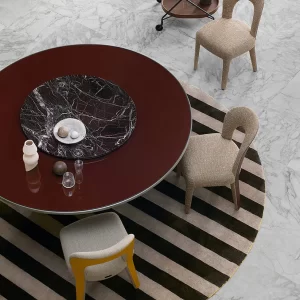
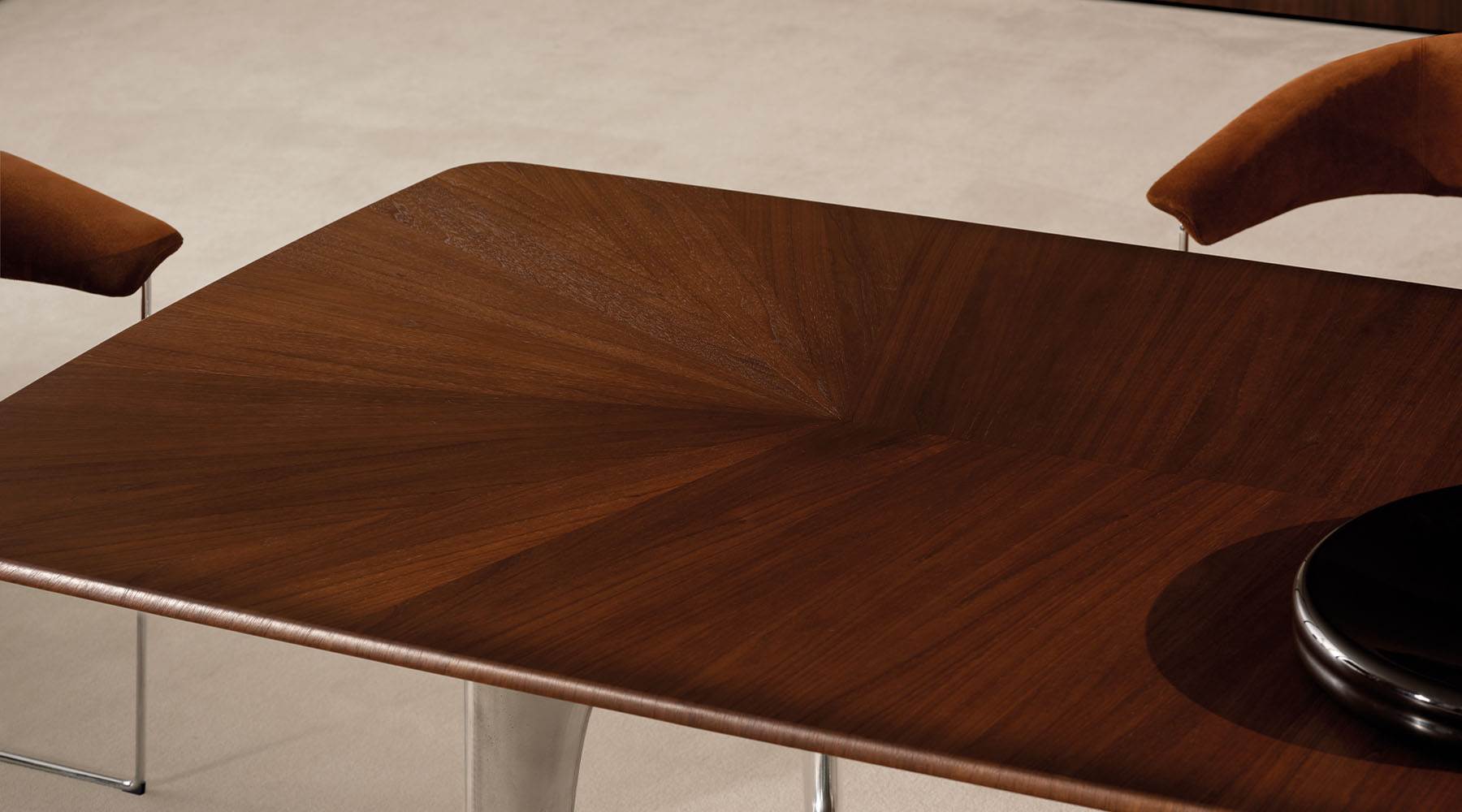
The top is available in wood or marble, completing what Peer describes as the material narrative of the piece. Wood introduces formal purity and warmth, allowing the curvature of the base to carry the visual drama while the top remains composed and direct. Marble shifts the register entirely: denser, cooler and more architectural, it amplifies the monumental quality of the trestle base and grounds the piece in a specific and weighty material tradition.
Configurations
Available configurations:
– Single or double trestle base in cast aluminium, polished or painted finish
– Wood top, multiple sizes and geometries
– Marble top, multiple sizes and geometries
– Double base configuration traces a convex line, reinforcing structural equilibrium at larger scales
Perfect For
– Rooms where the table is expected to carry material weight and cultural reference in equal measure, whether as a central living surface or an anchor piece in a more formal setting
– Living spaces where the cast aluminium trestle reads as a piece of domestic architecture rather than furniture support
– Interiors that reference the organic modernist tradition of Henry Moore or the Brazilian modernism of Niemeyer
– Clients who value a table where the base is the primary design statement and the top completes it rather than competing with it
– Spaces where the marble top version amplifies the monumental quality of the curved trestle base
– Designers specifying Hannes Peer across multiple categories within a single interior, where Blaine’s references connect directly to Peer’s broader design philosophy
Blaine draws its curves from Moore and Niemeyer and casts them in aluminium. A table where the base is the argument and the top, in wood or marble, is its conclusion.